
REVIEW · ANTALYA OLD TOWN & KALEICI
Antalya: Old Town Walking Tour with Turkish Tea and Baklava
Two hours in Kaleici makes history feel close. You’ll move at a walkable pace through Antalya’s Old Town lanes, with stops that explain how this port city grew from Roman times to Seljuk-era icons. The icing is a short Turkish tea and baklava break that keeps the tour from turning into a nonstop stomp.
I love two things most: the big-photo moment of Hadrian’s Gate (Üç Kapılar), and the fact that your guide connects landmarks like the clock tower and minaret mosque to everyday life in Antalya.
One drawback to plan around: midday can be very hot, especially if your slot lands around 12:30, and the cobblestones ask for decent walking shoes.
Roman-to-Ottoman sights in one tight loop across Kaleici and the Old Harbor area
Hadrian’s Gate plus other anchor landmarks like the Clock Tower and Hıdırlık Tower
A real guide in English who helps you read what you’re seeing
Tea and baklava included, with built-in break time for photos and recovery
Entrance fees are included, so you don’t have to scramble for tickets
Small-group energy is common on this walk (some departures run tiny)
In This Review
- Why Kaleici Works So Well for a 2-Hour Walk
- Meeting on Atatürk Cd. and Getting Into the Old Lanes
- Hadrian’s Gate (Üç Kapılar): Your Roman “Entrance Ticket”
- Kaleici Stroll to the Clock Tower Area
- Hıdırlık Tower: Views Plus a Lighthouse-Story
- The Ethnographic Museum Stop: A Breather With Context
- Yivli Minaret Mosque and Seljuk-Style Details You Can Actually Spot
- Old Harbor: The Part That Changes the Mood
- Tea and Baklava: Not a Random Add-On
- Price and Value: Is $29 Fair for This Walk?
- Small-Group Energy and Guide Styles That Matter
- What to Wear and Bring for Kaleici Cobblestones
- Who This Tour Suits Best
- Should You Book This Antalya Old Town Walking Tour?
- FAQ
- How long is the Antalya Old Town walking tour?
- How much does the tour cost?
- Where do I meet the guide?
- What’s included in the price?
- Are food and drinks included?
- What landmarks do you see during the walk?
- Does the tour include photo stops and breaks?
- Is there an option to skip the ticket line?
- Is it flexible to cancel or pay later?
Why Kaleici Works So Well for a 2-Hour Walk

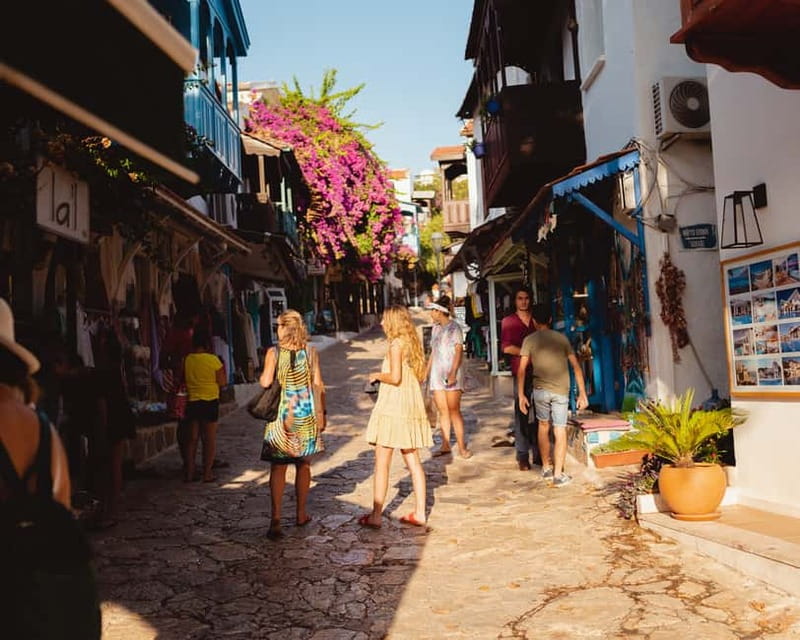
Antalya’s Old Town, Kaleici, is the kind of place where you can cover a lot of ground without feeling like you’re speed-walking through a museum. The streets curve and narrow, and the Mediterranean Sea is close enough that sea air and sky keep interrupting the sightseeing fatigue.
What makes this experience especially smart is the focus. You’re not trying to “do everything.” Instead, you hit the headline structures and viewpoints—Hadrian’s Gate, the Clock Tower area, Hıdırlık Tower’s overlook—then you slow down with Turkish tea and baklava. That combo matters because Antalya’s center can feel warmer, louder, and more chaotic when you’re on your own.
This is also a good fit if you want a quick orientation before you branch out later for seafood or beach time. You’ll leave with a mental map of where the Roman-era entrance sits, where the views open up, and which landmarks are tied to specific periods.
More ways to wander Kaleici and old Antalya
- Antalya Luxury Old Town Tour with Cable Car & Boat Trip
★ 4.5 · 1,880 reviews - Antalya Luxury Old Town Tour with Cable Car & Boat Trip
★ 4.6 · 1,374 reviews - Antalya: Ancient Perge, Aspendos Theater & City of Side Tour
★ 4.8 · 1,237 reviews - Antalya: Old Town with Aquarium or Cable Car & Waterfalls
★ 4.6 · 1,201 reviews
Meeting on Atatürk Cd. and Getting Into the Old Lanes

You start at Atatürk Cd. No:38, with your guide meeting you in front of McDonald’s. It’s a practical setup: easy to find, and it gets you moving right away without wasting time figuring out the meeting point.
Once you’re with your guide, the tour’s rhythm makes sense. You’ll walk the cobblestone lanes through Kaleici, with scheduled stops for photos and short breaks. That built-in structure is what keeps this from feeling like a long wander where you’re constantly asking yourself: What am I looking at?
Also, you’ll get more out of the Old Town when you understand the street logic. Kaleici isn’t laid out like a modern grid. It bends, it funnels, and it rewards slow turns. A good guide (and the departures here are often praised for that) helps you notice details you’d miss—window shapes, defensive line remnants, and why certain buildings sit where they do.
Hadrian’s Gate (Üç Kapılar): Your Roman “Entrance Ticket”
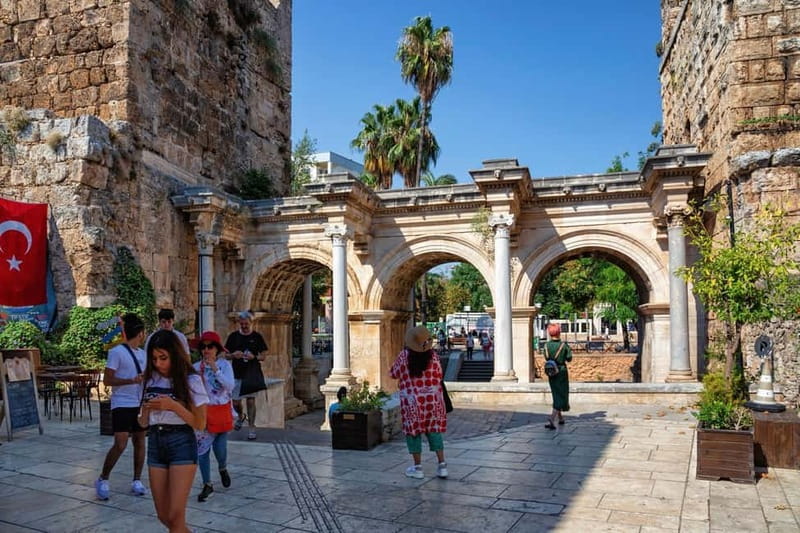
The highlight stop for many people is Hadrian’s Gate, also known as Üç Kapılar or Three Gates. It dates to 130 AD, built to honor Emperor Hadrian’s visit. This matters because the gate isn’t just a photo backdrop—it’s a statement that Antalya had enough importance to justify serious Roman architecture.
When you stand near it, you can think about what the gate did for the city. It marked movement between spaces—past and present, inside and outside—and it signaled status. Your guide should point out how Roman design shows up here and how later eras used the same strategic idea: control the entry points to protect a valuable port town.
Practical note: this is a natural place to slow down and shoot. The structure is big and clear from multiple angles. If you like taking photos without fighting crowds, go a little early or choose a departure that avoids the hottest hours.
Kaleici Stroll to the Clock Tower Area
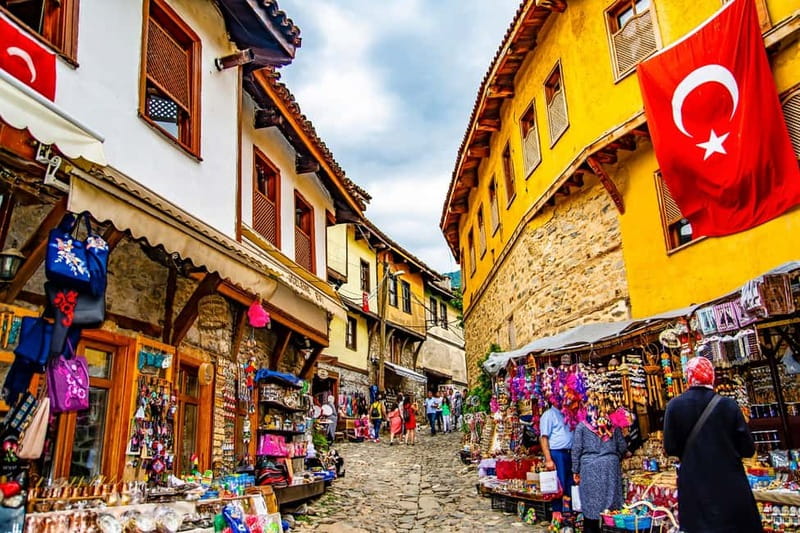
After Hadrian’s Gate, your walk keeps feeding you landmarks. You’ll spend time around the parts of the Old Town that connect daily life to the city’s historic layers, with stops that include photo breaks and guided commentary.
One of the most useful stops is the Antalya Clock Tower. It was built in 1901 and served as the main entrance to Antalya Castle. That detail gives the tower more meaning than “pretty structure.” You’re looking at a marker of the city’s defensive and administrative past, now softened into a landmark people enjoy on a casual walk.
If you’re the type who likes to learn while walking (and not turn the whole trip into lectures), the clock tower stop is a good middle anchor. You get context, then you immediately see how that context relates to the streets around it.
Hıdırlık Tower: Views Plus a Lighthouse-Story
The tour also includes Hıdırlık Tower, a Roman-era structure dating back to the 2nd century AD. It sits on a hill with a look over Old Town and the Mediterranean Sea. That hillside position is a huge part of why this tower is so effective: you can understand the geography in minutes.
Here’s the extra layer your guide should bring up: during the Middle Ages, the tower served as a lighthouse. That means it wasn’t only about architecture—it was about navigation and survival at sea. Port cities depended on sightlines, and this tower gave sailors a landmark to read the coast.
You’ll also get break time here, which is smart. Even in cooler months, you may need a breather on the hill. This stop is where your photos shift from street-level “look up and frame it” shots to wider views.
If you’re traveling with someone who gets tired walking, this is one of the best spots for a short pause. It breaks the pattern and makes the whole hike feel worth it.




The Ethnographic Museum Stop: A Breather With Context

The route includes a stop at the Antalya Ethnographic Museum. Even if your time inside is limited compared to a standalone museum visit, the value is how it connects what you see outside to how people lived.
This is where I like guided tours to be useful. You’re not just collecting landmarks—you’re getting cultural context that helps you interpret what you’re looking at. Ethnographic museums are often strongest when you’re ready to connect everyday details to the broader story of place, and a walking tour pace gives you that “light but meaningful” exposure.
Because entrance fees are included, you don’t have to second-guess whether you’ll be able to go in during your paid time. And skipping that ticket friction keeps the day moving smoothly.
Yivli Minaret Mosque and Seljuk-Style Details You Can Actually Spot
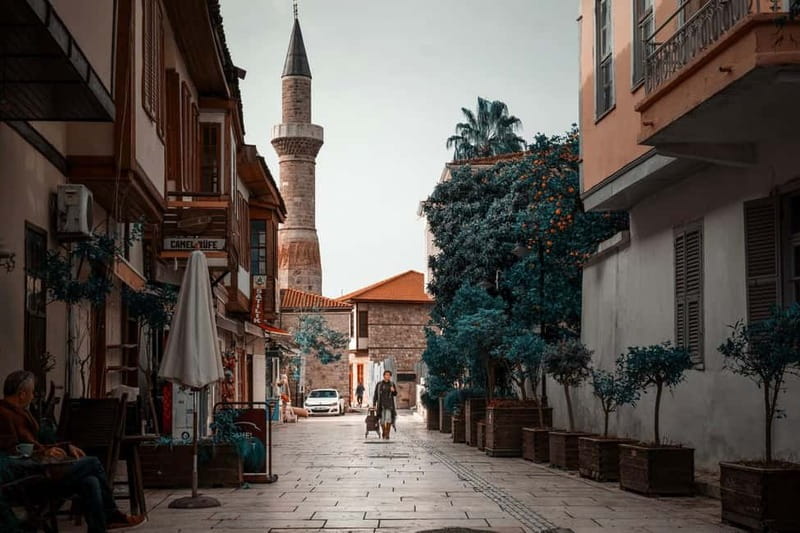
You’ll also see Yivli Minaret Mosque, an iconic landmark of Antalya. The minaret has eight fluted sections, and the mosque is from the 14th century, built during the Seljuk dynasty. It still serves as a place of worship, so you’ll want to treat it with respect and move quietly where appropriate.
The practical advantage of having a guide here is that the details become readable. Without explanation, you might simply admire the silhouette. With a guide, you understand why the minaret’s shape is distinctive and how architectural styles moved through time.
If you like architecture, this is one of the stops where you can slow down and compare what you see with what you learn. Roman-era structures and Seljuk-era towers sit in the same walking loop, which makes the changes feel real rather than abstract.
Old Harbor: The Part That Changes the Mood

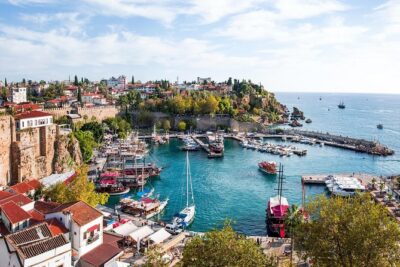
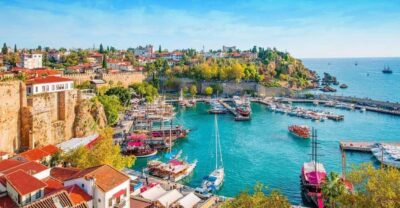
The tour also emphasizes Old Harbor and includes time that makes sense for photo moments and sightseeing. This is the area where Antalya’s story changes tone. The focus shifts from stone walls and gates to the water connection that made the city valuable in the first place.
The tour explanation makes a key point: Antalya was a hub for international trade because of its strategic location. Today, the area has been restored to showcase the port city feel. In other words, you’re walking in a place that’s meant to help you imagine the city’s old role.
For your planning: if you’re lucky with timing, Old Harbor is the kind of place that can look dramatic when the light softens later in the day. Even without a perfect sunset, the water and boats add a reset. It’s a good antidote to all the narrow-street looking.
Tea and Baklava: Not a Random Add-On
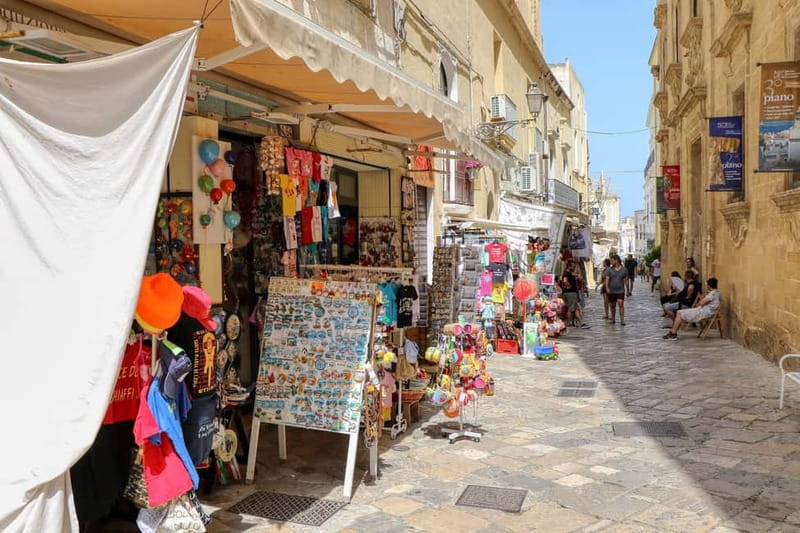
This tour includes Turkish tea and baklava, and it’s not just a snack break. It’s a small cultural moment that makes sense for the geography and pace. Tea gives you a warm pause when you’ve been walking, and baklava is a classic Antalya-friendly finish.
What I like is that it’s tied to the route. The itinerary includes break time, and reviews regularly praise the tea-and-baklava stop as a real highlight. One good sign: guides are often specifically credited by name—Ali, Ibrahim, Oğuzhan (Ozzie), Ozzy, Recep, and Yiğit come up—so you’re less likely to feel like you’re being herded into a food stop with no real context.
Also, note what’s not included: food and drinks beyond that included tea and baklava. If you’re hungry after the tour, plan on continuing your day with a proper meal elsewhere.
Price and Value: Is $29 Fair for This Walk?
At $29 per person for about 2 hours, this is priced like a proper guided experience—not a free stroll, and not a long museum day. The value comes from a few things you get here:
- A live English guide who connects multiple eras
- Several major landmarks in one loop (gate, tower, clock tower area, minaret, harbor)
- Entrance fees included, which matters for the museum stop
- Tea and baklava included, so your budget stays predictable
It’s still a walking tour, so if you’re expecting transport, a long museum immersion, or a full-day itinerary, $29 won’t feel “cheap.” Some people felt it was a bit pricey for what is essentially walking around. That’s a fair reaction if you’re comparing it to self-guided roaming.
My practical take: if you want context—how Hadrian’s Gate, Seljuk architecture, and defensive-era features connect—this price is more reasonable. If you’re the kind of person who’s happy with guide-free exploration, you could do it solo and spend less. But you’ll miss the “why” behind the “wow” stops.
Small-Group Energy and Guide Styles That Matter
You can feel the difference between a generic tour and a strong guide when you’re in narrow lanes with lots of stops. Reviews highlight guides like Ibrahim, Ali, Recep, Ozzie/Ozzy, and Yiğit for history and storytelling, and you’ll likely feel the same.
One specific detail worth mentioning: one review notes a small group of 4, and that was described as easier for negotiating narrow lanes. That kind of size helps with flexibility—better photo timing and fewer people to squeeze past.
Another useful tip from reviews: avoid the 12:30 slot if you’re sensitive to heat. If your dates are flexible, you’ll enjoy this more in an earlier morning departure or later in the day when walking feels less punishing.
And yes, it can run in rain; at least one departure ran despite bad weather. So if you’re visiting in a season with sudden showers, bring a light rain layer and plan for slick cobblestones.
What to Wear and Bring for Kaleici Cobblestones
Kaleici is cobblestone country. You’ll appreciate this advice even if you don’t love walking tours: wear shoes that grip and ankles that don’t complain.
Bring:
- Comfortable walking shoes (not sandals)
- A camera/phone with enough battery (you’ll want shots at the gate and tower views)
- A light layer for shade (Old Town streets can be narrow, and sun can hit fast)
If you get heat easily, use that 12:30 tip. Even with breaks built into the plan, you’ll still do a two-hour walk. Pace yourself from the start.
Who This Tour Suits Best
This is a strong match if:
- You want a guided orientation to Antalya’s Old Town without spending a whole day
- You like history that’s tied to visible landmarks (Roman, Seljuk, and later Ottoman-era markers)
- You enjoy walking tours where stops include explanation, not just photos
It’s less ideal if:
- You hate walking on uneven ground
- You want long time inside museums or deep, full-day site coverage
- You’re only in Antalya for a very short layover and need minimal walking
Should You Book This Antalya Old Town Walking Tour?
If you want the fast track to seeing Antalya’s most recognizable Old Town landmarks in two hours, with a guide who explains what you’re looking at, I think you should book. The included tea and baklava are a nice bonus, and the included entrance fees help the tour feel complete rather than like a half-formed stroll.
If you’re on a strict budget and you’re perfectly happy figuring things out on your own, you might decide against it. But if you care about understanding why Hadrian’s Gate matters, how Hıdırlık Tower relates to the sea, and what the Clock Tower signals about the city’s past, the $29 feels more like paying for clarity than for walking.
FAQ
How long is the Antalya Old Town walking tour?
It runs for 2 hours.
How much does the tour cost?
The price is $29 per person.
Where do I meet the guide?
Meet at Atatürk Cd. No:38, in front of McDonald’s.
What’s included in the price?
A live English guide, the walking tour, Turkish tea, baklava, and entrance fees.
Are food and drinks included?
No. Food and drinks beyond the included tea and baklava are not included.
What landmarks do you see during the walk?
You’ll see Hadrian’s Gate, the Clock Tower, Hıdırlık Tower, the Yivli Minaret Mosque, Old Harbor, and you also stop at the Antalya Ethnographic Museum during the tour.
Does the tour include photo stops and breaks?
Yes. The plan includes break time and photo stops at multiple points.
Is there an option to skip the ticket line?
Yes, the tour includes skipping the ticket line.
Is it flexible to cancel or pay later?
Free cancellation is available up to 24 hours in advance for a full refund. You can also reserve now and pay later.
Kaleici, a Few More Turns


Fresh on the Antalya pages: more Antalya tours to browse
- Full Day Tour in Salda Lake and Pamukkale From Antalya★ 4.5 · 3 reviews
- Antalya Adventures ATV Quad Safari Tour with Roundtrip Transfer★ 5.0 · 3 reviews
- Antalya Old Town Guided Walking Tour of City Highlights★ 4.5 · 3 reviews
- Antalya: Deniz Molalı At Safarisi★ 3.0 · 3 reviews
- 2-Day Guided Cappadocia Tour from Antalya/Belek/Side/Alanya★ 4.3 · 3 reviews
Antalya Old Town & Kaleici, compared.
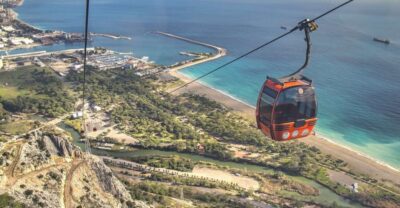 ★ 4.5Old City, Waterfalls, Olympos Cable Car, BoatFrom $292,896 reviews
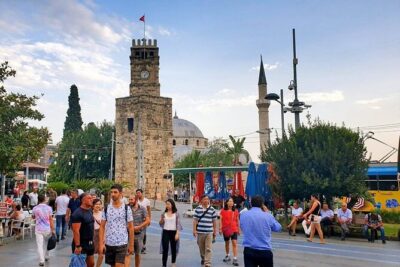 ★ 4.5Antalya Luxury Old Town Tour with Cable Car & Boat TripFrom $321,880 reviews
★ 4.6Antalya Luxury Old Town Tour with Cable Car & Boat TripFrom $181,374 reviews
★ 4.5Antalya Luxury Old Town Tour with Cable Car & Boat TripFrom $321,880 reviews
★ 4.6Antalya Luxury Old Town Tour with Cable Car & Boat TripFrom $181,374 reviews
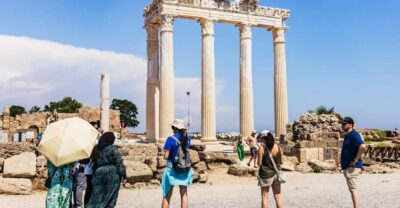 ★ 4.8Ancient Perge, Aspendos Theater & City of Side TourFrom $411,237 reviews
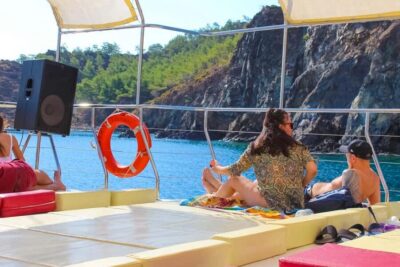 ★ 4.6Old Town with Aquarium or Cable Car & WaterfallsFrom $291,201 reviews
 ★ 4.5City Tour with Boat Trip, Old Town & WaterfallsFrom $45700 reviews
 ★ 4.6Kekova Sunken City, Demre & Lycia Day TourFrom $80680 reviews
 ★ 4.6Guided Old Town Tour with Boat Trip and LunchFrom $8665 reviews
Browse the lists this tour appears in