
REVIEW · ANTALYA OLD TOWN & KALEICI
Antalya: Perge Ancient City Tour
Perge feels like history you can walk through, not just read about. I love that the tour hits the big carved landmarks fast, then slows down just enough for you to understand what you’re actually seeing. A couple things I particularly liked: the way the guide makes daily life feel real, and how the route balances major stops like the theater and stadium with quieter, more “you’ll notice it once you know” details like colonnaded streets and fountains. The one drawback to plan for: Perge is hot and bright, with limited shade.
This is a small-group tour (up to 10) from Antalya city center, designed to be manageable in 3.5 hours. I also like the guide-led pace: you’re not wandering lost, and you’re not rushing past everything either. Still, it’s not for everyone—if you have mobility concerns or use a wheelchair, this visit likely won’t work well because the ruins involve uneven ground and walking.
Top takeaways
- Small group with an English guide (max 10) makes questions easy, especially when you want context.
- The theater, stadium, and monumental gates are the “wow” anchors, and you’ll learn what they meant beyond photos.
- Colonnaded streets, fountains, and the agora area help you connect architecture to everyday routines.
- Gymnasion and baths (plus a church area) show the social and public side of ancient life.
- Ticket basics handled at the gate: you buy entrance on-site, and you should bring water and sun protection.
In This Review
- Getting from Antalya to Perge Without the Headache
- The First Real Wow: Entering Perge With Context
- Theater and Stadium Stops: More Than Big Stone Seats
- City Gate and Monumental Entrances: How Cities Announce Themselves
- Colonnaded Streets, Fountains, and the Agora: The Parts You Remember Later
- Gymnasion and Baths: The Social Side of Ancient Daily Life
- The Key Thing: How Onder Makes Perge Feel Real
- Weather and Comfort: Shade Is Limited, So Plan Like a Local
- Skip the Ticket Line, But Buy Your Entrance Ticket
- Price and Value: Why $59 Can Be a Good Deal
- Who This Perge Tour Really Suits
- Should You Book the Antalya: Perge Ancient City Tour?
- FAQ
- How long is the Perge Ancient City Tour?
- Where do you meet for the tour?
- Is the entrance ticket to Perge included?
- What does the tour cost?
- Is the tour guide English-speaking?
- Is the tour a small group?
- What should I bring for the tour?
- Is the tour suitable for wheelchair users?
Getting from Antalya to Perge Without the Headache
This tour starts with pickup from Antalya city center, and you meet at SHELL GAS STATION. From there, you ride to Perge together. That matters because Perge isn’t a “drop in for 20 minutes” kind of place—you’ll want the time, and you’ll want the route to feel organized.
The tour runs 3.5 hours, which is a sweet spot if you’re pairing Perge with other Antalya-area plans. It’s long enough to see the major ruins (and get a sense of how they fit together), but short enough that you don’t end up spending your whole day battling heat and crowds.
And yes, the tour includes drop-off back at your meeting point afterward, so you don’t have to scramble for transportation once you’re done.
More ways to wander Kaleici and old Antalya
- Antalya Luxury Old Town Tour with Cable Car & Boat Trip
★ 4.5 · 1,880 reviews - Antalya Luxury Old Town Tour with Cable Car & Boat Trip
★ 4.6 · 1,374 reviews - Antalya: Ancient Perge, Aspendos Theater & City of Side Tour
★ 4.8 · 1,237 reviews - Antalya: Old Town with Aquarium or Cable Car & Waterfalls
★ 4.6 · 1,201 reviews
The First Real Wow: Entering Perge With Context
The best part of a guided ruin visit isn’t that someone tells you what something is. It’s that you start seeing relationships—how one building connects to another, how a city is laid out, and how people likely moved through their day.
Perge is located in Antalya Province, and it was once the capital of the Pamphylia Region. It also ties into a major historical thread: the city was invaded by Alexander the Great. When the guide frames that early on, the ruins stop feeling random. Suddenly, you’re looking at a place that mattered—culturally, politically, and socially.
Your walk begins with an overview of the city, including a helpful model of the city you’ll likely use as a mental map. That’s a big deal. If you’ve ever visited ruins and thought, I’m staring at stones but I can’t connect them, this is the fix.
Theater and Stadium Stops: More Than Big Stone Seats
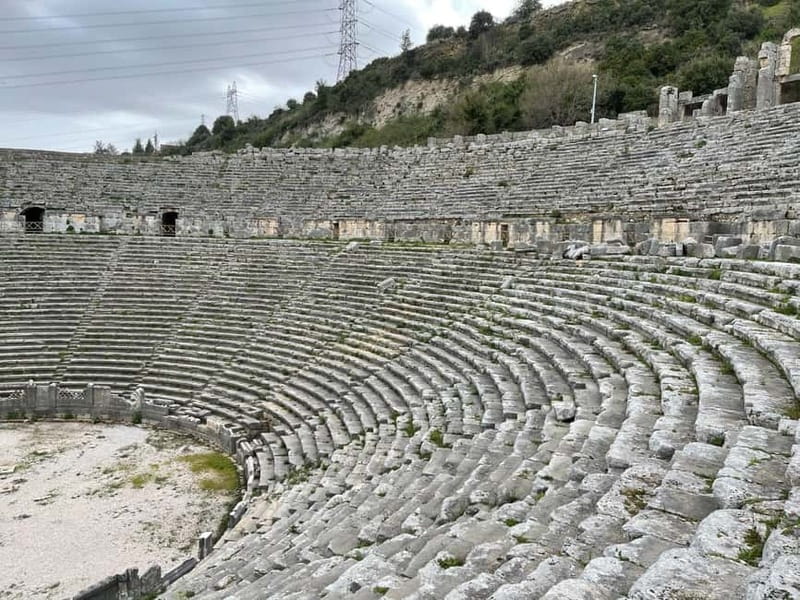
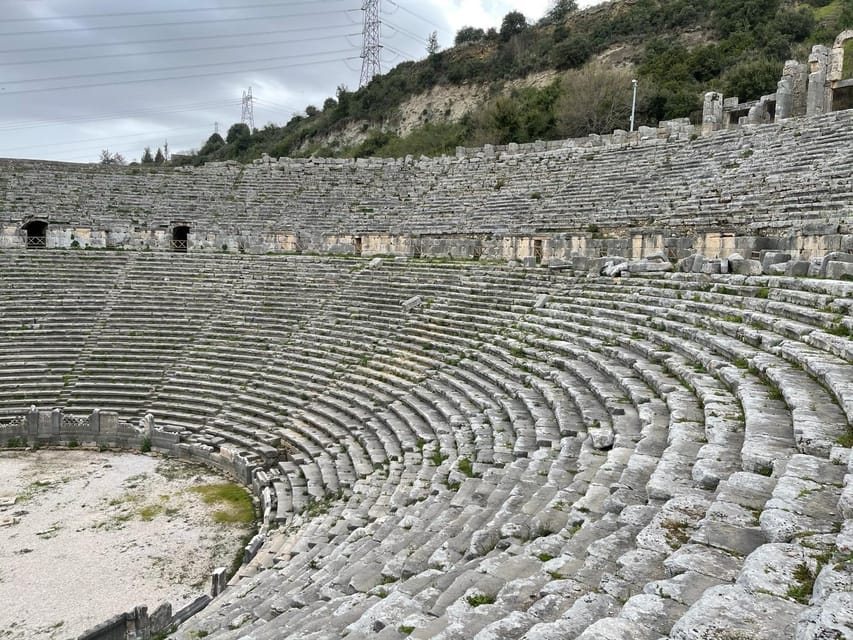
Perge’s ancient theater is the first major “camera-ready” moment. But the value here is not just the scale. With a guide, you can understand how a theater functioned as a public space—somewhere people gathered for events, performances, and community moments.
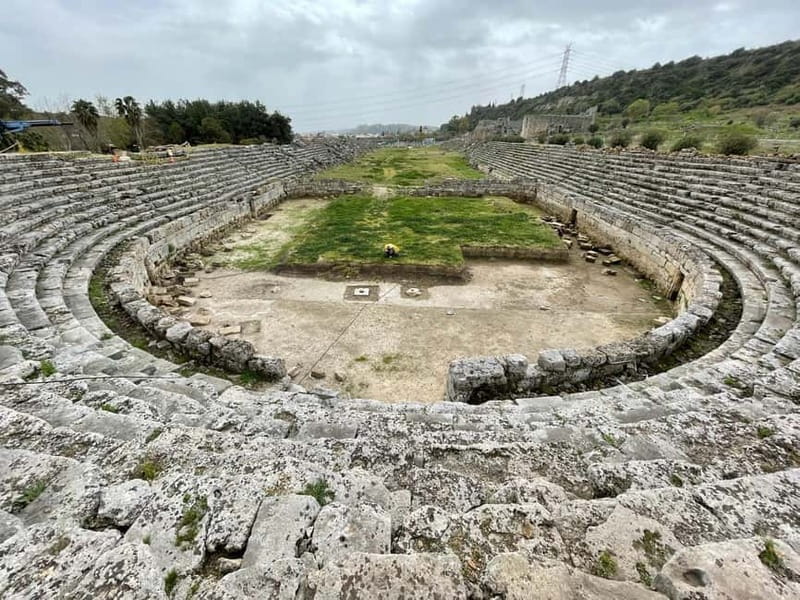
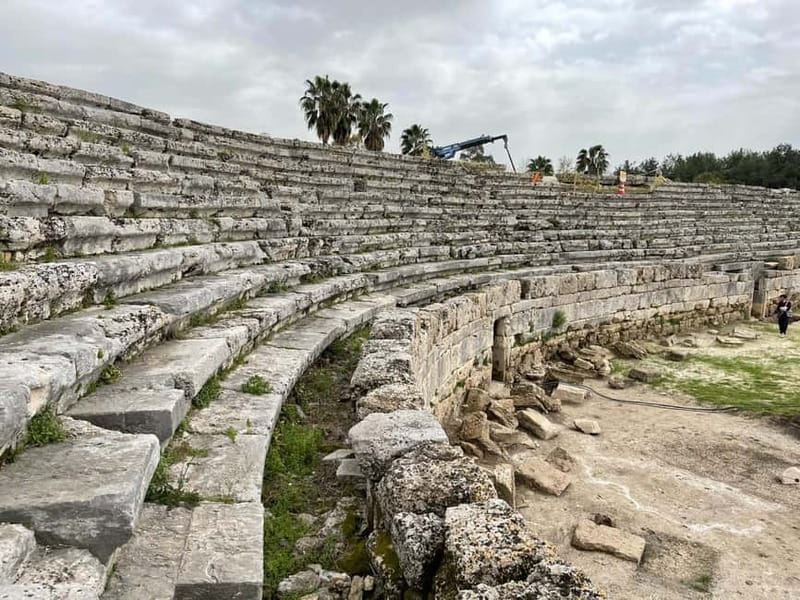
Next you’ll see the stadium, another anchor structure. A stadium suggests a culture that valued organized public life, not only private households. You’ll walk through the area and get explanations that help you picture activity in a place that now looks still.
One small tip that pays off: slow down at these two sites. Take photos, yes. But also pause long enough to look for orientation cues—what’s near what, and which directions the city’s main movement likely followed. The guided storytelling helps you do that, and it makes your photos feel smarter later.
City Gate and Monumental Entrances: How Cities Announce Themselves
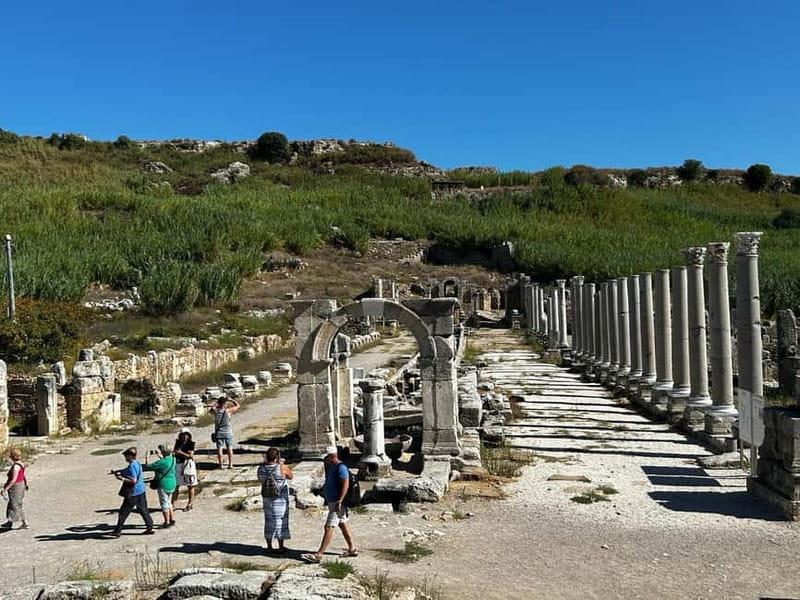
You’ll also cover city gate areas and monumental gates. These entrances are more than “cool ruins you pass by.” They’re how the city presents itself—boundaries, authority, and the visual impression of arrival.
When you know to look at gates as a kind of statement, you’ll spend less time thinking, Where exactly is this? and more time thinking, Why was this built here? That shift is what turns a collection of ancient parts into a place you can actually understand.
And because Perge is one of the oldest cities in the Pamphylia region, this early look helps you appreciate it as an urban system, not just a single landmark site.
Colonnaded Streets, Fountains, and the Agora: The Parts You Remember Later
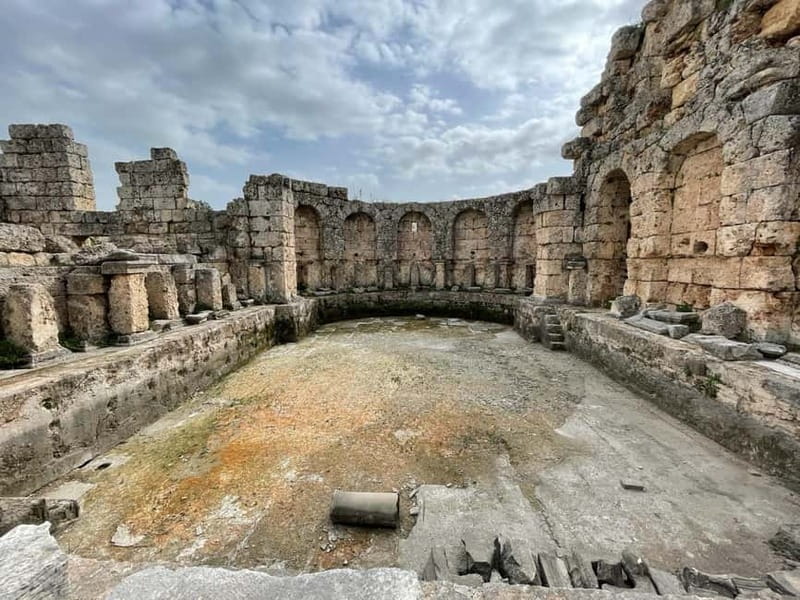
If you want the tour to feel like you’re walking a living ancient city, this is where it clicks.
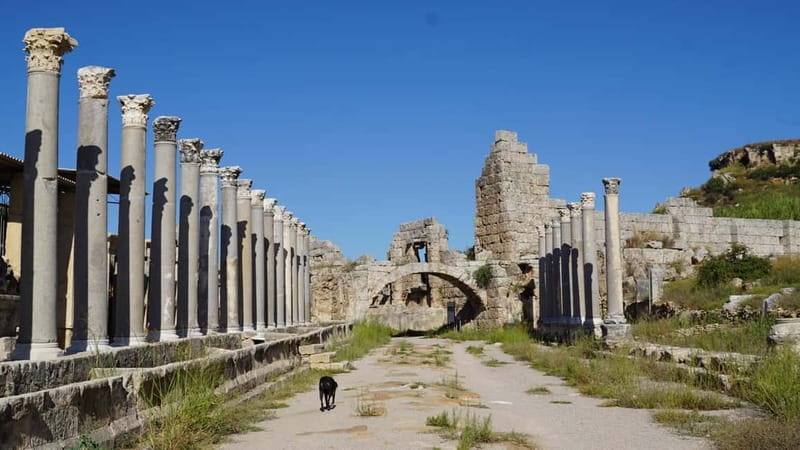
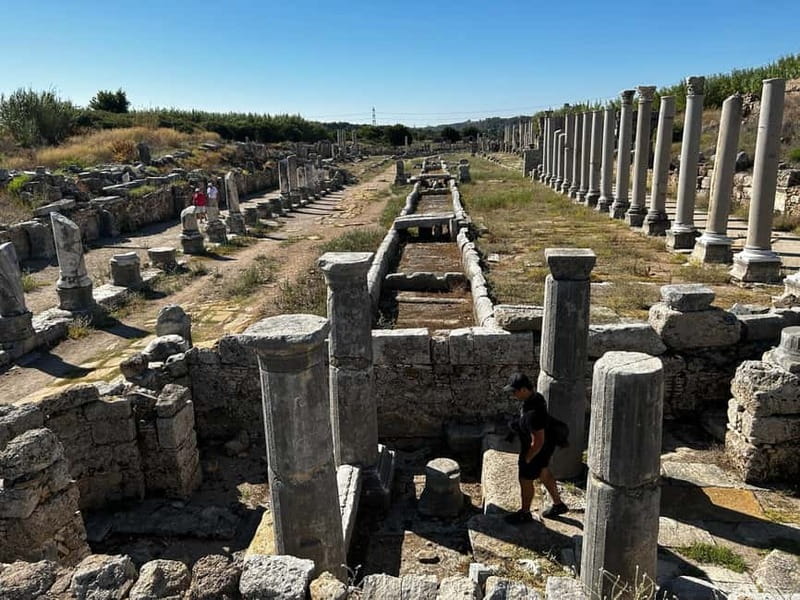
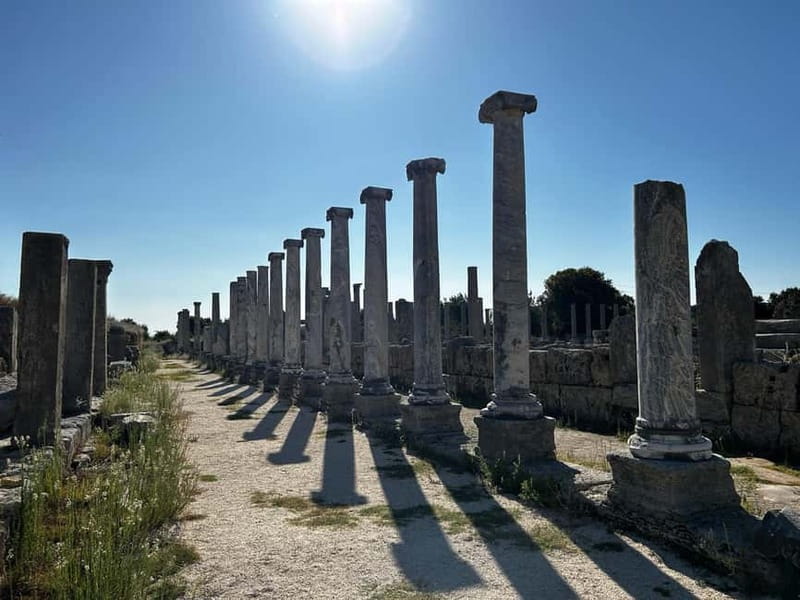
You’ll explore colonnaded streets—long corridors lined with columns—along with fountains and the agora area. This isn’t just architecture appreciation. It’s about public space: places people used to meet, move, shop, and talk.
What I like about these stops is that they’re where your brain starts building scenes. You can’t see people living there now, of course, but you can see how the layout supports movement and gathering. A guide helps you connect the dots: you’ll hear what the spaces were likely for, and you’ll notice details you’d otherwise miss.
For photos, these areas are great because you get depth—rows of columns and long sight lines. Bring your camera and take at least a couple slow shots, not only quick snapshots. The colonnades in particular look best when you angle slightly so you catch the perspective stretching down the street.
More Roman stone: Perge, Aspendos and the ruins near Antalya


Gymnasion and Baths: The Social Side of Ancient Daily Life
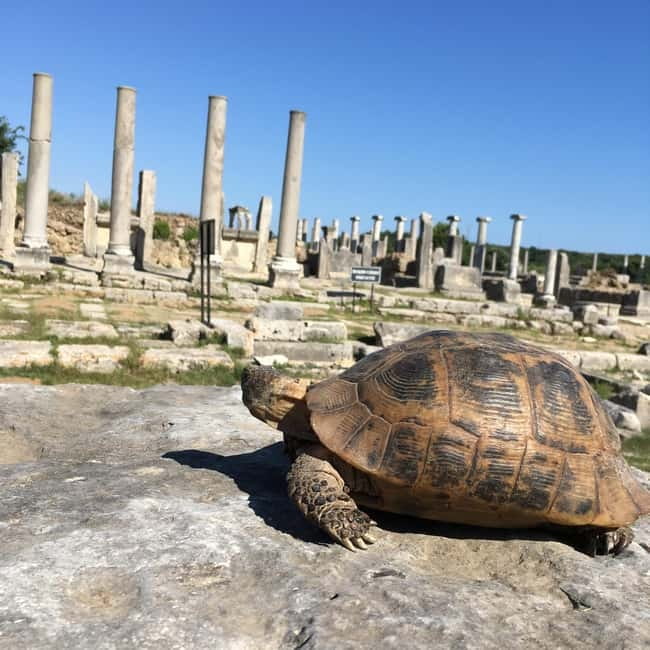
Perge isn’t only about politics and big public events. You’ll also see gymnasion and baths areas. These stops give you a different flavor of ancient life—training, routine, conversation, and daily care.
Even if you’re not an archaeology buff, this is where guided explanations matter most. When someone tells you what these spaces were used for, you start seeing why cities invested in them. Baths and training spaces weren’t optional extras. They were part of how people built community and identity.
There’s also a church in the overall route, which adds another layer to the city’s timeline. It reminds you that Perge didn’t shut down all at once; it changed, adapted, and continued being used in later periods.
The Key Thing: How Onder Makes Perge Feel Real
A tour lives or dies by the guide, and this one has a strong track record with Onder (also seen as Ondar or Yonder in different bookings). In my view, the main reason the experience lands so well is the focus on small details and daily-life explanations.
You’ll hear stories that tie architecture to routine—what it likely meant to move through the city, gather in public, attend events, and use spaces like baths and training areas. The guide also points out “look here” moments that turn a wall, an opening, or a layout into something you can actually interpret.
People also note the guide’s helpful, supportive style. For example, there’s a real sense that Onder pays attention to whether you’re comfortable on the day (including support if someone had concerns about being able to go). That’s not just kindness—it affects the quality of the visit because you stay focused on the experience instead of worrying.
Weather and Comfort: Shade Is Limited, So Plan Like a Local
This is a practical tour, but Perge can cook you. The site has not a lot of shade, so you’ll want to show up ready.
Bring:
- Water
- Hat
- Sunscreen
- Comfortable shoes
- Camera
This isn’t optional if you’re sensitive to sun. Even if the ruins look cool, the walk between stops can feel long when the heat hits. If you’re thinking about mid-day timing, don’t. Aim for earlier hours if that’s an option when you check availability.
Also note: smoking isn’t allowed during the tour.
Skip the Ticket Line, But Buy Your Entrance Ticket
The tour includes skip the ticket line, which helps you get moving faster. However, entrance to Perge Ancient City is not included. You’ll purchase your ticket at the gate, so have a little cash or a card ready.
This is where you can judge value. You’re paying $59 for the guided experience plus pickup and drop-off, and you cover the on-site entrance separately. If you were planning to visit Perge anyway, the math usually works out because you’re essentially buying an organized half-day guide experience rather than doing everything yourself.
Price and Value: Why $59 Can Be a Good Deal
At $59 per person for 3.5 hours, you’re getting:
- Pickup and drop-off at the city center
- A licensed English-speaking live guide
- A structured route through key parts of the ancient city
- A small group (up to 10)
What you’re not getting is the entrance ticket, meals, or drinks. Still, for a half-day guided ruin visit—especially one that clearly focuses on daily life and not just dates—the value is strong.
Here’s how I’d think about it as a traveler: if you want Perge as a meaningful experience (not just a photo stop), you’re paying for context. If you’re the type who enjoys wandering with no narrative, you may not get as much from the guide.
Who This Perge Tour Really Suits
This tour is a great fit if:
- You want a guided route that keeps you oriented
- You like hearing how people lived, not only what buildings look like
- You prefer a small group setting
- You’re short on time but still want major highlights like the theater, stadium, and colonnaded streets
It’s not a great fit if:
- You have mobility impairments or use a wheelchair (the tour isn’t suitable for wheelchair users)
- You strongly prefer lots of shade and minimal walking
Also, it’s in English, so if English is your comfort zone, you’re set.
Should You Book the Antalya: Perge Ancient City Tour?
I’d book it if you want Perge to make sense. The difference with a guide like Onder is that you don’t just see ruins—you start building an internal map of how the city functioned: public life in theaters and agoras, movement along colonnades, and everyday routines in places like baths and the gymnasion.
Skip it if you’re chasing a quiet, unguided stroll and you don’t care about historical context. You’ll still see impressive remains, but you’ll get less out of them.
If you do book, prepare for the sun. Bring water, sunscreen, and a hat. And once you arrive, slow down at the big sites and let the explanations connect the dots. That’s when Perge stops being stones and starts feeling like a real city.
FAQ
How long is the Perge Ancient City Tour?
The tour lasts 3.5 hours from pickup to drop-off.
Where do you meet for the tour?
You meet at SHELL GAS STATION for pickup.
Is the entrance ticket to Perge included?
No. You purchase your Perge Ancient City entrance ticket at the gate.
What does the tour cost?
The price is listed as $59 per person.
Is the tour guide English-speaking?
Yes, the live tour guide provides English instruction.
Is the tour a small group?
Yes. The group is limited to 10 participants.
What should I bring for the tour?
Bring comfortable shoes, a hat, sunscreen, a camera, and water.
Is the tour suitable for wheelchair users?
No. It is not suitable for people with mobility impairments or wheelchair users.
More Rome in the Sand



Kaleici, a Few More Turns



Fresh on the Antalya pages: more Antalya tours to browse
- Full Day Tour in Salda Lake and Pamukkale From Antalya★ 4.5 · 3 reviews
- Antalya Adventures ATV Quad Safari Tour with Roundtrip Transfer★ 5.0 · 3 reviews
- Antalya Old Town Guided Walking Tour of City Highlights★ 4.5 · 3 reviews
- Antalya: Deniz Molalı At Safarisi★ 3.0 · 3 reviews
- 2-Day Guided Cappadocia Tour from Antalya/Belek/Side/Alanya★ 4.3 · 3 reviews
Antalya Old Town & Kaleici, compared.
 ★ 4.5Old City, Waterfalls, Olympos Cable Car, BoatFrom $292,896 reviews
 ★ 4.5Antalya Luxury Old Town Tour with Cable Car & Boat TripFrom $321,880 reviews
★ 4.6Antalya Luxury Old Town Tour with Cable Car & Boat TripFrom $181,374 reviews
 ★ 4.8Ancient Perge, Aspendos Theater & City of Side TourFrom $411,237 reviews
 ★ 4.6Old Town with Aquarium or Cable Car & WaterfallsFrom $291,201 reviews
 ★ 4.5City Tour with Boat Trip, Old Town & WaterfallsFrom $45700 reviews
 ★ 4.6Kekova Sunken City, Demre & Lycia Day TourFrom $80680 reviews
 ★ 4.6Guided Old Town Tour with Boat Trip and LunchFrom $8665 reviews
Browse the lists this tour appears in