
REVIEW · WORKSHOPS
Antalya: Turkish Cooking Class with a Local Host
Four courses, one real Antalya home kitchen. This Turkish cooking class in Antalya Province is a hands-on way to learn classic dishes from Sinem, a local home cook with lessons passed down from her grandmother. You start with Turkish tea, then cook, talk, and finally sit down to eat everything you make.
I especially love how personal it feels, not like a demo you watch from the sidelines. With a small group of up to 6 people, everyone takes part, and dishes like börek and sarma aren’t just named on a menu.
One drawback to consider: the main hearty course changes with the season, so you can’t guarantee a specific dish unless it matches what’s being cooked at that time of year.
In This Review
- Key highlights you will actually care about
- Stepping into Sinem’s Antalya home kitchen
- Turkish tea, introductions, and the point of the conversation
- Course-by-course: börek, sarma, seasonal salads, and the main that changes
- First course: börek (a classic start)
- Second course: stuffed grape leaves (sarma)
- Third course: seasonal salads
- Fourth course: a hearty main course that fits the season
- How Sinem teaches: grandmother methods and hands-on practice
- Eating together: what the meal feels like at the end
- Price and value: what $94 buys you (and why it’s not just a fee)
- Practical tips so you get the most out of the class
- Who this Antalya Turkish cooking class suits best
- Should you book Sinem’s Turkish cooking class?
- FAQ
- What is the duration of the cooking class?
- Where does the class meet?
- How many people are in the group?
- What language is the instruction in?
- What will I cook during the class?
- Is Turkish tea included?
- Do I eat the food at the end?
- Who teaches the class?
- What does the class include?
- What is the cancellation policy and can I pay later?
Key highlights you will actually care about
- Cook in a real home in Antalya Province instead of a commercial classroom kitchen
- Warm welcome with Turkish tea plus introductions before you touch any ingredients
- Learn börek and stuffed grape leaves (sarma) with step-by-step guidance
- Make a full 4-course meal, including seasonal salads and a hearty main
- Small group of up to 6 so you’re not standing around
- Eat together with your host and hear the stories behind the food
More Turkish cooking to try your hand at in Antalya
- Antalya: Kunefe Cooking Class with Local Chef in Old Town
★ 5.0 · 4 reviews
Stepping into Sinem’s Antalya home kitchen
This is one of those experiences where the setting does half the job for you. You meet at Sinem’s home, and that changes the whole vibe. Instead of a classroom feel, it feels like you’ve been invited to help cook for an everyday family meal—just with a planned structure and an English-speaking host.
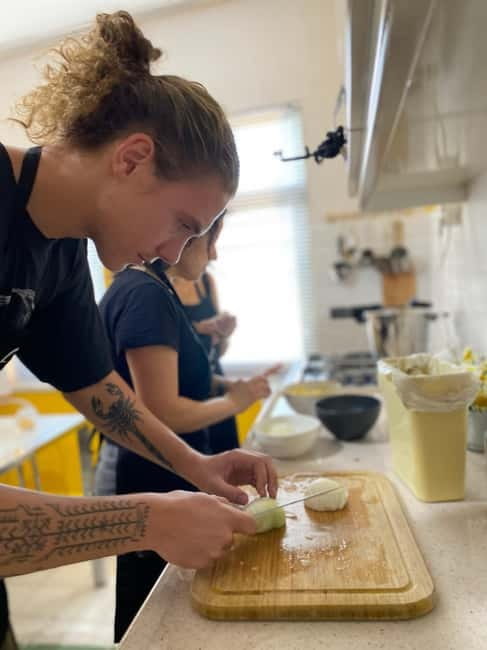
Because it’s a private home setting, you’ll likely notice the kitchen is built for real cooking, not show cooking. You’re not just collecting recipe tips; you’re learning the practical rhythms: when ingredients are prepped, how the work is split, and how the host keeps everything moving so you actually finish a complete meal in three hours.
The group size also matters here. Limited to 6 participants, the class stays hands-on. That means you can ask questions, get direct feedback, and actually practice what you’re doing—especially with hands-on tasks like rolling, folding, and assembling.
If you like cultural experiences that don’t rely on a stage, this home-kitchen format is the core reason to pick this class.
Turkish tea, introductions, and the point of the conversation
The class doesn’t jump straight to flour. You begin with Turkish tea and introductions, which might sound like a small detail, but it sets expectations. In a good cooking class, the host explains more than steps. They explain why the food looks the way it does, why certain flavors belong together, and where the tradition comes from.
Sinem teaches in English, so communication is set up for you. Still, don’t expect it to be stiff or formal. One of the best parts of this experience is that it’s also a cultural conversation—food used as a way to talk about family, food memories, and why meals bring people together.
This matters because it’s exactly how you can take more than recipes home. When you understand the logic behind a dish, you can adjust at home when ingredients aren’t identical or when your kitchen tools aren’t the same as theirs.
And the warmth shows up in how the class flows. You’re not rushed through “copy this technique.” You’re guided, corrected, and encouraged—then you sit down together to eat.
Course-by-course: börek, sarma, seasonal salads, and the main that changes
The heart of the class is a 4-course meal made with fresh ingredients. You’ll work through multiple dishes rather than focusing on one. That’s a big deal if your goal is to get a broader sense of Turkish home cooking and not just one impressive party trick.
Here’s what you can expect in the lineup:
First course: börek (a classic start)
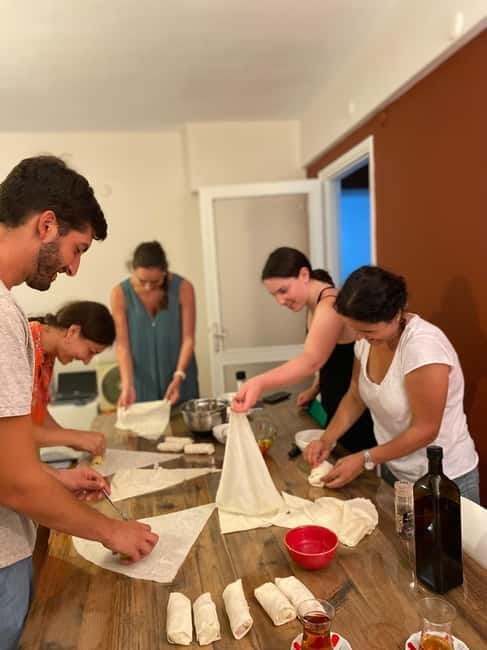
Börek is one of those dishes that instantly signals Turkish comfort food. In this class, you’ll learn to make it as part of the cooking process, which is far more useful than reading a recipe later and guessing what “the right look” should be.
What you’re really learning with börek is technique—how layers and structure are built, and how dough and filling work together. The exact method can vary by home and family tradition, but the takeaway is consistent: you’ll come away with a practical approach you can repeat.
More make-it-yourself classes in Antalya


Second course: stuffed grape leaves (sarma)
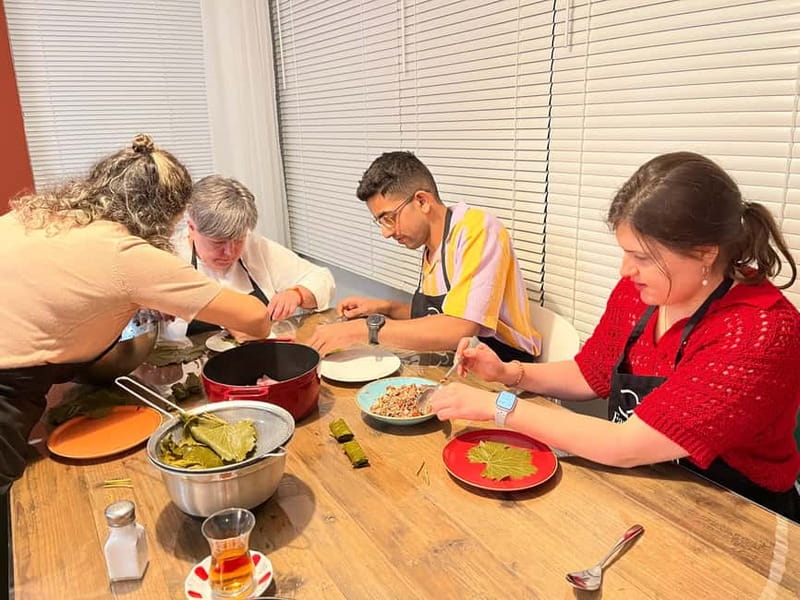
Next up are stuffed grape leaves, or sarma. This dish is all about patience and careful assembly. Even if you’ve never rolled anything like it before, the class format gives you time and guidance while you practice.
Sarma also teaches you how Turkish flavor is built. You’re not just learning a recipe—you learn how stuffing tastes when it’s cooked gently and how the herb-and-meat (or herb-forward) profile becomes harmonious rather than sharp.
This is also one of the most “authentic home meal” kinds of foods. When you eat it later at your own table, you’ll feel how much care goes into the small steps.
Third course: seasonal salads
Then you’ll shift from cooked comfort food to something lighter: seasonal salads. Seasonal salads are a smart third step because they balance the heavy courses and they also show you how Turkish meals use fresh ingredients.
Since the salads are seasonal, you’re getting a glimpse of what’s actually available and what tastes right at that time of year. That helps your cooking at home too, because you’ll be less stuck trying to recreate one exact ingredient list forever.
Fourth course: a hearty main course that fits the season
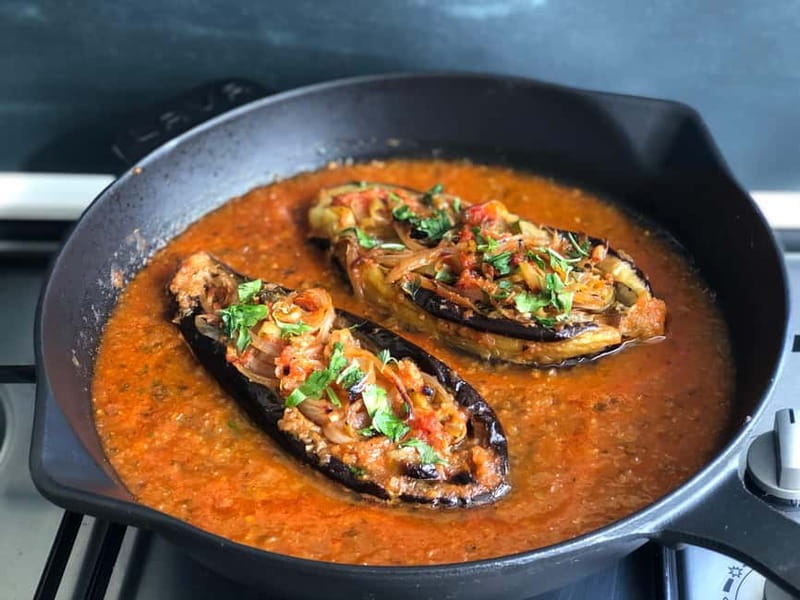
Finally, there’s a hearty main course that changes with the time of year. That means you’re not locked into the same “tourist version” of Turkish cooking every single day.
From your perspective, that’s a small tradeoff. You might have a specific main in mind, and you won’t be able to guarantee it. But as a cooking lesson, a seasonal main course is more honest and more useful. It trains you to cook like a local—using what’s fresh now.
This course completes the meal you start building from scratch. And then you’ll sit down and enjoy the full results.
How Sinem teaches: grandmother methods and hands-on practice
The teaching style here is practical and personal, and you can feel that the knowledge comes from generations. Sinem learned what she knows from her grandmother, and you experience that as a mix of technique plus storytelling.
In a class like this, the most valuable part isn’t memorizing the steps. It’s understanding the pattern of Turkish home cooking:
- Fresh ingredients matter
- Timing matters
- Assembly and structure matter
- Taste is adjusted through experience, not only measurements
The small group size supports that learning style. With up to 6 participants, there’s enough attention to correct how you’re folding, rolling, or building. That’s important for börek and sarma, where the result depends on how you put things together.
From the feedback I’m paying attention to most, people really liked that fresh ingredients were used and that everyone in the group actively participated. That’s exactly what you want: a class where the “learning moment” is doing the work, not watching someone else do it.
Also, expect plenty of laughter and conversation. It’s not a silent workshop. Cooking here is tied to company, and that makes the techniques easier to remember because you connect them to moments in the class.
If you’re someone who learns best by doing, this fits your style. If you’re just seeking a quick taste of Turkish food, you may prefer a simpler food tour—but if you want skills you can use again, this is built for that.
Eating together: what the meal feels like at the end
After cooking, you sit down and enjoy your four-course meal. That sit-down moment is not an afterthought. It’s when everything clicks, because you taste what you made while the host can still explain what you’re noticing.
And the company is part of the value. The class includes not only the food but also a cultural conversation. You’re sharing the meal in a cozy setting with other participants, guided by a host who is invested in making sure it feels like more than a transaction.
In the experience, people mention the welcome and the warmth of the family dynamic. The host and her husband also help create that sense of being looked after. Even if you hit a few language bumps, the communication still tends to work through warmth, gestures, and a shared focus on the food.
This is one reason why I like cooking classes that happen in homes: the meal feels like an event, not just an endpoint.
Price and value: what $94 buys you (and why it’s not just a fee)
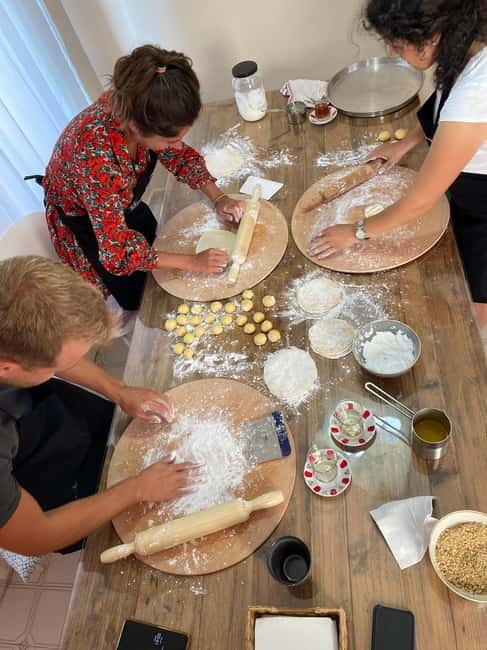
The price is $94 per person for a three-hour class with a hands-on four-course meal, Turkish tea, and guided cooking in English for a small group.
Here’s the value math I’d use when deciding:
- You’re not paying for watching. You’re paying for practicing.
- You’re not leaving with one dish recipe. You’re leaving with experience making multiple dishes.
- You get ingredients handled and guided by a local host—time you’d otherwise spend guessing your way through.
Can you buy a plate of börek or grape leaves in Antalya for less? Sure. But that’s not the same experience. This class is about learning technique plus building confidence with Turkish staples.
Also, because it’s limited to 6 participants, you’re more likely to get real attention from Sinem and the family. In a larger setting, the class can turn into a rushed assembly line. Here, you get more human coaching.
For many people, the “value” isn’t only the meal. It’s the feeling that you learned something real and personal from someone who cooks this way at home.
Practical tips so you get the most out of the class
This is a hands-on experience in someone’s home kitchen. That means a few simple choices can make your day smoother.
- Wear comfortable clothes you don’t mind getting a little flour on. Cooking is messy in a normal way.
- Come ready to participate. The best result from this class comes when you’re willing to try the rolling/folding steps.
- Plan for a full meal at the end. Since it’s a four-course lunch/dinner-style experience, you won’t want a heavy plan right before.
- If you prefer structured instructions, the English instructor helps. Still, expect conversation to be part of the flow since it’s hosted at home.
One more thing: since the last main course is seasonal, check your expectations. If you need a specific dish, you might feel disappointed in some months. If you’re happy learning what locals cook right now, this works really well.
Who this Antalya Turkish cooking class suits best
I’d point this class toward you if you want any of the following:
- You like learning by doing, not just eating.
- You want a small-group experience with a local host.
- You’re curious about classic Turkish dishes like börek and sarma.
- You want more than recipes—something tied to family stories and food culture.
- You’d rather cook in a home environment than in a commercial kitchen.
It may be less ideal if you’re looking for a quick stop-and-sample activity, or if you dislike hands-on work. You’ll be cooking for real, not just tasting.
If you’re traveling solo, this can still feel social because you cook together and share the meal at the end. If you’re a couple, the small group format is often a comfortable size.
Should you book Sinem’s Turkish cooking class?
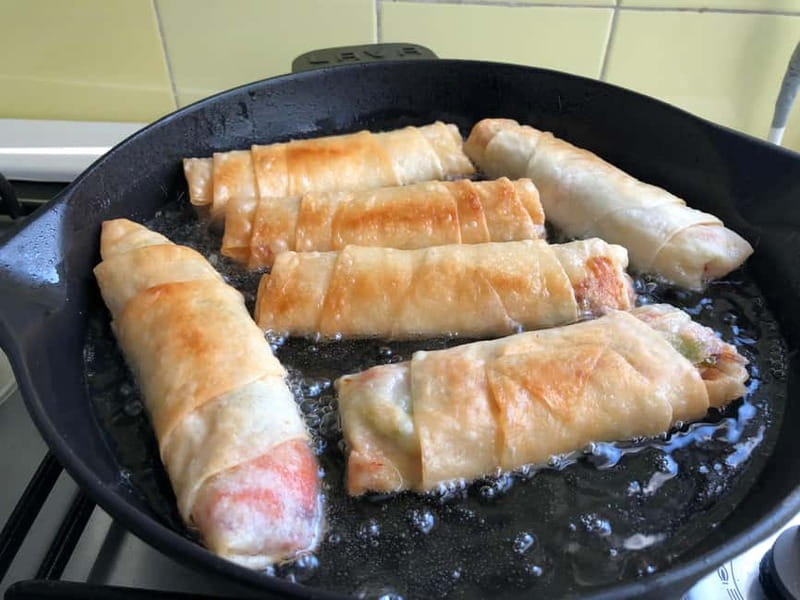
If you want an authentic Antalya food experience with real skills, I think this is an easy yes. You get börek, stuffed grape leaves (sarma), seasonal salads, and a hearty seasonal main, plus Turkish tea and a guided cultural conversation in a small group.
Book it if:
- You’ll enjoy learning technique in a home setting
- You’re happy with a seasonal main dish
- You value fresh ingredients and step-by-step help from Sinem
Skip it if:
- You only want to taste a single dish and move on
- You’re not interested in hands-on cooking
- You need a specific main course that might not match the season
FAQ
What is the duration of the cooking class?
The class lasts 3 hours.
Where does the class meet?
You meet at the host’s home.
How many people are in the group?
The group is limited to 6 participants.
What language is the instruction in?
The instructor teaches in English.
What will I cook during the class?
You’ll help prepare a 4-course meal, including börek and stuffed grape leaves (sarma), plus seasonal salads and a hearty main course that changes with the time of year.
Is Turkish tea included?
Yes. Turkish tea is included.
Do I eat the food at the end?
Yes. After cooking, you sit down to enjoy the meal you made.
Who teaches the class?
The class is hosted by Sinem, a local home cook.
What does the class include?
It includes the hands-on cooking class, Turkish tea, a four-course meal, and a cultural conversation.
What is the cancellation policy and can I pay later?
Free cancellation is available up to 24 hours in advance for a full refund, and you can reserve now and pay later (pay nothing today).
More Make-It-Yourself


More Turkish Kitchens
Fresh on the Antalya pages: more Antalya tours to browse
- Full Day Tour in Salda Lake and Pamukkale From Antalya★ 4.5 · 3 reviews
- Antalya Adventures ATV Quad Safari Tour with Roundtrip Transfer★ 5.0 · 3 reviews
- Antalya Old Town Guided Walking Tour of City Highlights★ 4.5 · 3 reviews
- Antalya: Deniz Molalı At Safarisi★ 3.0 · 3 reviews
- 2-Day Guided Cappadocia Tour from Antalya/Belek/Side/Alanya★ 4.3 · 3 reviews
Workshops, compared.
 ★ 5.0Antalya Old Town: Perfume Workshop Antalya with 100+EssencesFrom $33444 reviews
 ★ 5.0Antalya Old Town: Traditional Mosaic Lamp or Candle WorkshopFrom $23379 reviews
 ★ 5.0Turkish Coffee Workshop + Fortune Telling + Gift SetFrom $15127 reviews
 ★ 5.0Turkish Mosaic Lamp Workshop in Antalya Near Old TownFrom $37120 reviews
 ★ 5.0Turkish Mosaic Lamp Workshop in Old Town – All IncludedFrom $3856 reviews
 ★ 5.0Antalya Old Town : Perfume Workshop with 90+ EssencesFrom $3750 reviews
 ★ 5.0Turkish Coffee on Sand Workshop: Gift SetFrom $3347 reviews
 ★ 4.8Perfume Workshop with Secret Recipe +90 EssencesFrom $3343 reviews
Browse the lists this tour appears in